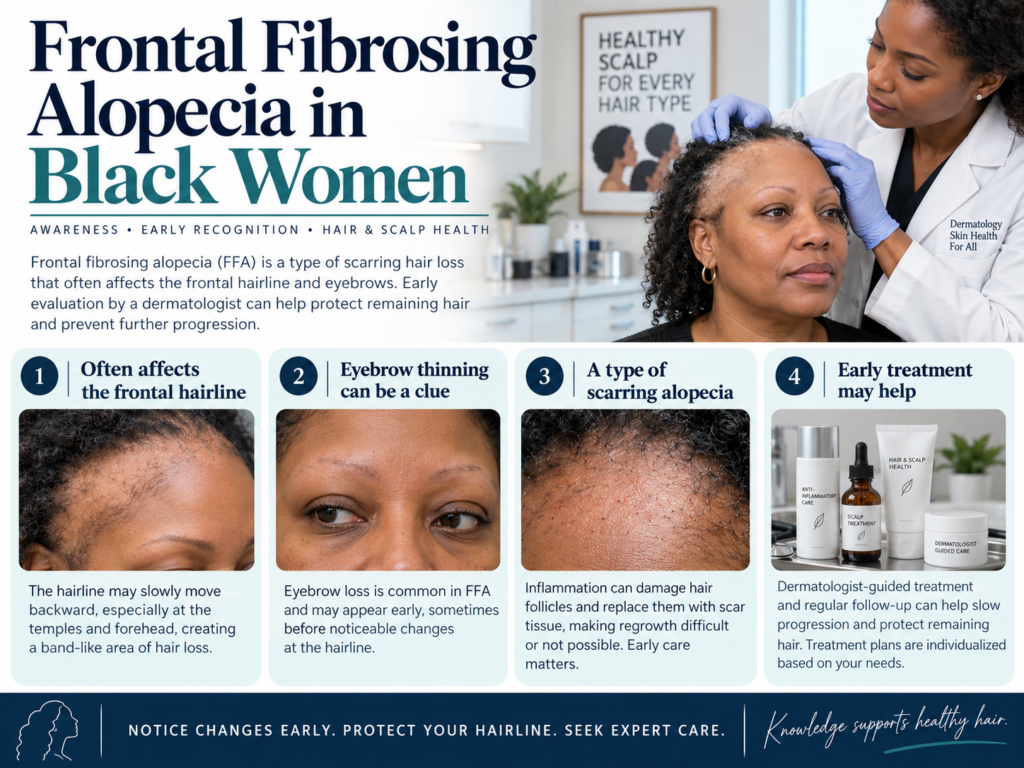
Frontal fibrosing alopecia in Black women is a scarring form of hair loss that usually starts at the front and sides of the hairline. It often goes unrecognized for a long time, because it can look like normal thinning, a receding hairline, or hair damage from styling. Learning the early signs matters, because hair lost to scarring generally does not grow back on its own.
What Frontal Fibrosing Alopecia Is
Understanding frontal fibrosing alopecia in Black women starts with knowing what the condition does to the follicle. Frontal fibrosing alopecia, often called FFA, is an inflammatory condition that attacks hair follicles and replaces them with scar tissue. The inflammation is usually slow and quiet, so hair loss can progress for months before it is noticed. FFA is considered a variant of lichen planopilaris, which is an inflammatory scarring disorder, and it is one of several causes of scarring hair loss that dermatologists evaluate in Black women.
Why Frontal Fibrosing Alopecia Is Often Mistaken for Other Hair Loss
Early FFA can look like traction alopecia from tight hairstyles, central centrifugal cicatricial alopecia (CCCA), or ordinary hairline changes. The main differences are the location and the pattern. FFA typically affects the frontal and temporal hairline, and it often comes with eyebrow thinning or loss. CCCA usually starts at the crown. Traction alopecia tends to follow the areas that are under the most tension. Because these conditions can overlap, a careful exam and history matter. Our article on CCCA in Black women explains how that condition differs.
Early Signs of Frontal Fibrosing Alopecia in Black Women
- A receding hairline at the front or sides that keeps moving back over time
- Thinning or loss of eyebrows, especially the outer edges
- Itching, burning, tenderness, or soreness on the scalp near the hairline
- Small red bumps or scaling around hair follicles at the hairline
- Smooth, shiny skin in areas where hair has thinned
- Loss of facial hair or body hair in some patients
Some people notice symptoms for a while before they see obvious hair loss. If you have any of these signs, do not assume they are just from your hairstyle.
Why Frontal Fibrosing Alopecia Needs Early Evaluation
Because FFA causes scarring, hair that is lost in scarred areas typically does not regrow. Early evaluation gives your dermatologist the best chance to calm the inflammation before more follicles are damaged. A scalp biopsy is often the most reliable way to confirm the diagnosis, and it helps separate FFA from other causes of hair loss that need different care.
Treatment Options for Frontal Fibrosing Alopecia
Treatment for frontal fibrosing alopecia in Black women aims to stop the inflammation and prevent further scarring. Options may include topical or injected corticosteroids, oral medications such as hydroxychloroquine, and hormone-related medications in some patients. Your dermatologist will choose a plan based on your history, symptoms, and how much hair has already been lost. Treatment does not reverse existing scarring, which is why acting early matters.
When to See a Dermatologist
See a dermatologist if you notice a receding hairline, eyebrow thinning, or scalp itching or burning near the front of your head, especially if the changes continue for more than a few months. Early care can help protect the hair you still have. Our team can evaluate these concerns in person, and Decatur patients can call (404) 495-3898 to schedule.
The American Academy of Dermatology offers general information on hair loss and when to seek care.
Frequently Asked Questions About Frontal Fibrosing Alopecia in Black Women
Is frontal fibrosing alopecia permanent?
Hair lost to scarring generally does not regrow. Treatment can slow or stop further loss, but it usually does not restore hair that has already been replaced by scar tissue.
Is frontal fibrosing alopecia the same as traction alopecia?
No, although they can look similar at first. Traction alopecia is caused by tension on the hair, while FFA is an inflammatory scarring condition that can continue even after tension is reduced.
Can frontal fibrosing alopecia affect eyebrows?
Yes. Eyebrow thinning or loss is a common sign of frontal fibrosing alopecia, and it can appear alongside hairline changes or before them.
Who should I see for frontal fibrosing alopecia in Black women?
A dermatologist who treats scarring hair loss and skin of color is the right first stop. A scalp exam and, if needed, a biopsy can confirm whether frontal fibrosing alopecia in Black women is the cause of your symptoms.
Where to Find Us
World’s Famous Dermatologist is a Black-owned dermatology practice with two locations. Our Decatur office is at 5040 Snapfinger Woods Dr #206, Decatur, GA 30035, and you can reach it at (404) 495-3898. Our Stockbridge office is at 1101 Hospital Dr #200, Stockbridge, GA 30281, and you can reach it at (678) 203-0666.
This article is general education and does not replace an in-person exam. If you have hair loss that concerns you, schedule an evaluation with a dermatologist.