Sunscreen for Black Skin: What to Use and Why
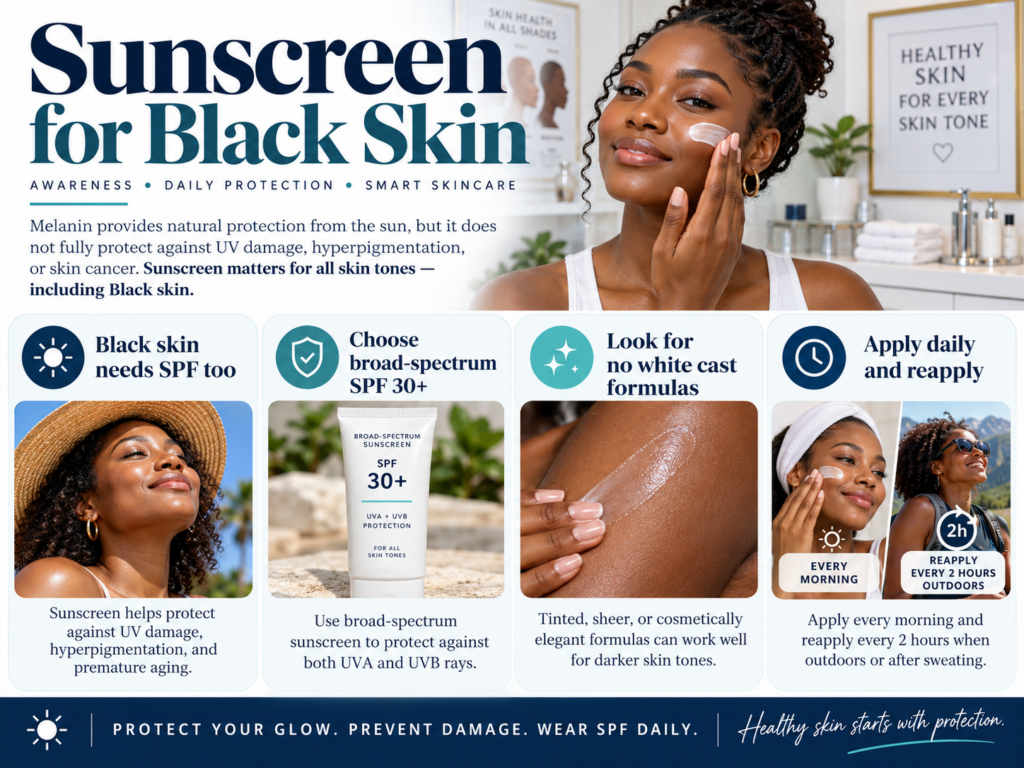
Sunscreen for Black skin is one of the most overlooked parts of skin care. Darker skin has more natural protection from ultraviolet (UV) light, but that protection is limited. Sun exposure can still cause sunburn, dark spots, and skin cancer, and it can make existing melasma or post-inflammatory marks darker. A daily sunscreen habit helps protect against all of these.
Why Sunscreen for Black Skin Still Matters
Melanin absorbs some UV light, which is why darker skin tends to burn less easily. It does not block all of it. Sun exposure can still damage skin cells, trigger hyperpigmentation, and increase the risk of skin cancers that are driven by UV, such as squamous cell carcinoma and basal cell carcinoma. Sunscreen is one of the simplest ways to reduce that exposure, and the American Academy of Dermatology recommends daily use for everyone.
What Sunscreen Can and Cannot Do
Sunscreen reduces UV damage, but it does not prevent every type of skin cancer. Acral melanoma, the most common melanoma in darker skin, forms on the palms, soles, and nail beds, which are not driven mainly by sun exposure. This is why sunscreen is important but not enough on its own. Regular skin checks, especially of the palms, soles, and nails, remain essential. Our article on skin cancer in Black people explains the warning signs to watch for.
How to Choose Sunscreen for Black Skin
- Choose a broad-spectrum sunscreen with an SPF of 30 or higher
- Pick a water-resistant formula if you sweat or swim
- Look for a formula that feels comfortable on your skin, since you are more likely to use it daily
- Consider tinted sunscreens if white cast is a concern, as many contain iron oxides
- Patch-test new products, especially if you have sensitive skin or a history of irritation
Mineral sunscreens with zinc oxide or titanium dioxide are often well tolerated, though they can leave a white or grayish cast. Chemical sunscreens blend in more easily for many people. The best sunscreen is the one you will use every day.
How to Apply and Reapply Sunscreen for Black Skin
Apply sunscreen to all exposed skin, including the ears, neck, and hands. For the body, the American Academy of Dermatology suggests about one ounce, roughly a shot glass full. Reapply about every two hours when you are outdoors, and sooner after swimming or heavy sweating. Do not forget the lips, scalp part, and tops of the feet.
Visible Light, Dark Spots, and Sunscreen
For many patients, the best approach to sunscreen for Black skin includes protection from visible light as well as UV. Visible light, including the light from sunshine and screens, can darken existing melasma and dark spots for some people. Sunscreens with iron oxides may help block some of this light, though research on this is still developing. If you are managing melasma, our guide to melasma treatment for Black skin covers treatment options, and our upcoming article on melasma and hormones in Black women explains how hormones can trigger it.
When to See a Dermatologist
See a dermatologist if you notice a new or changing spot, a sore that will not heal, or dark patches that keep returning or getting darker despite daily sunscreen use. Early evaluation can make a meaningful difference, especially for spots on the palms, soles, or nails.
Frequently Asked Questions About Sunscreen for Black Skin
Do I need sunscreen if I have dark skin?
Yes. Sunscreen for Black skin is still recommended because darker skin has more natural protection, but it is not complete. Sunscreen still helps prevent sunburn, hyperpigmentation, and UV-related skin cancers.
What SPF should I use?
An SPF of 30 or higher, labeled broad-spectrum, is the standard recommendation for daily use.
How do I avoid a white cast?
Try a tinted sunscreen, a chemical formula, or a lightweight mineral formula. Applying a thin layer and letting it absorb before makeup can also help.
Where to Find Us
World’s Famous Dermatologist is a Black-owned dermatology practice with two locations. Our Decatur office is at 5040 Snapfinger Woods Dr #206, Decatur, GA 30035, and you can reach it at (404) 495-3898. Our Stockbridge office is at 1101 Hospital Dr #200, Stockbridge, GA 30281, and you can reach it at (678) 203-0666.
This article is general education and does not replace an in-person skin exam. If you have spots or skin changes that concern you, schedule an evaluation with a dermatologist.