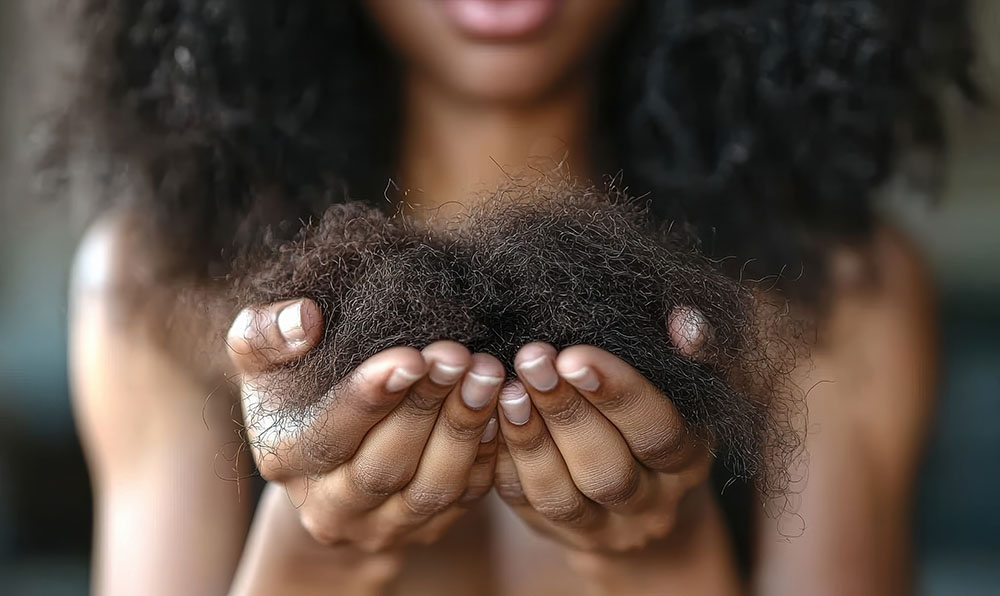
CCCA: Early Signs Black Women Shouldn’t Ignore
CCCA in Black women — central centrifugal cicatricial alopecia — is one of the most common causes of permanent hair loss we see, yet it’s frequently mistaken for ordinary thinning, breakage, or a bad reaction to styling until real damage has already been done. Catching it early can be the difference between manageable treatment and permanent, irreversible hair loss.
What Is CCCA?
CCCA is a form of scarring alopecia that starts at the crown of the scalp and gradually spreads outward in a circular pattern. Unlike temporary hair loss from stress, styling, or postpartum shedding, CCCA destroys the hair follicle itself — once scarring occurs, that follicle will not grow hair again. This progressive, permanent nature is what separates CCCA in Black women from more common, reversible causes of thinning, and it’s exactly why early detection matters so much: treatment can stop CCCA from progressing, but it can’t reverse follicles that are already scarred.
Why CCCA in Black Women Is So Common
The exact cause of CCCA isn’t fully understood, but it disproportionately affects Black women, and researchers believe a combination of genetics and certain hair care practices — including chemical relaxers, tight styles like braids or weaves that pull on the scalp, and heat styling — may contribute to its development. It’s important to note this isn’t about blaming any single styling choice; many women who never used these practices still develop this type of hair loss, and many who do use them never develop it. The pattern connecting CCCA in Black women to specific triggers is still being studied, which is part of why awareness of early symptoms matters more than trying to pinpoint a single cause.
Early Signs of Scarring Alopecia to Watch For
Because CCCA starts subtly, it’s easy to miss or misattribute to something else. Signs worth paying attention to include tenderness, itching, or a burning sensation at the crown before any visible hair loss appears, small bald patches at the center of the scalp that slowly widen over time, hair that breaks easily near the crown compared to other areas, and a shiny or smooth appearance to the scalp where hair has thinned. These early signs of CCCA are easy to write off as a bad braid-out or a temporary flare-up, which is exactly why so many cases go unaddressed until the hair loss becomes visible. If you notice any of these, especially scalp tenderness before visible thinning, it’s worth getting evaluated for CCCA rather than waiting to see if it resolves on its own.
How CCCA Is Diagnosed and Treated
A dermatologist can often recognize CCCA through a scalp exam, though a small scalp biopsy is sometimes used to confirm the diagnosis and rule out other causes of hair loss. Treatment focuses on stopping further progression rather than regrowing already-scarred areas, and may include anti-inflammatory medications to calm the underlying inflammation driving the scarring, topical or oral treatments depending on severity, and changes to hair care routines to reduce ongoing tension and damage to the scalp. Because CCCA in Black women often develops gradually over years, patience and consistency with treatment matter as much as catching it early — the earlier it starts, the more hair can realistically be preserved.
Getting Evaluated for CCCA in Decatur or Stockbridge
If you’re noticing scalp tenderness, unexplained thinning at the crown, or hair that seems to be breaking more than usual in one specific area, don’t wait for it to get worse. Both our Decatur and Stockbridge offices evaluate and treat CCCA and other scarring alopecias regularly, and early intervention gives you the best chance of preserving the hair you have.
Related Pages
For women dealing with CCCA or other hair and scalp concerns, learn more about the full range of services available near you: Black Dermatologist Decatur or Black Dermatologist Stockbridge.
Concerned About CCCA in Black Women? Don’t Wait to Get Checked
Schedule a consultation at our Decatur or Stockbridge office — early evaluation is the best way to protect your hair from permanent damage.