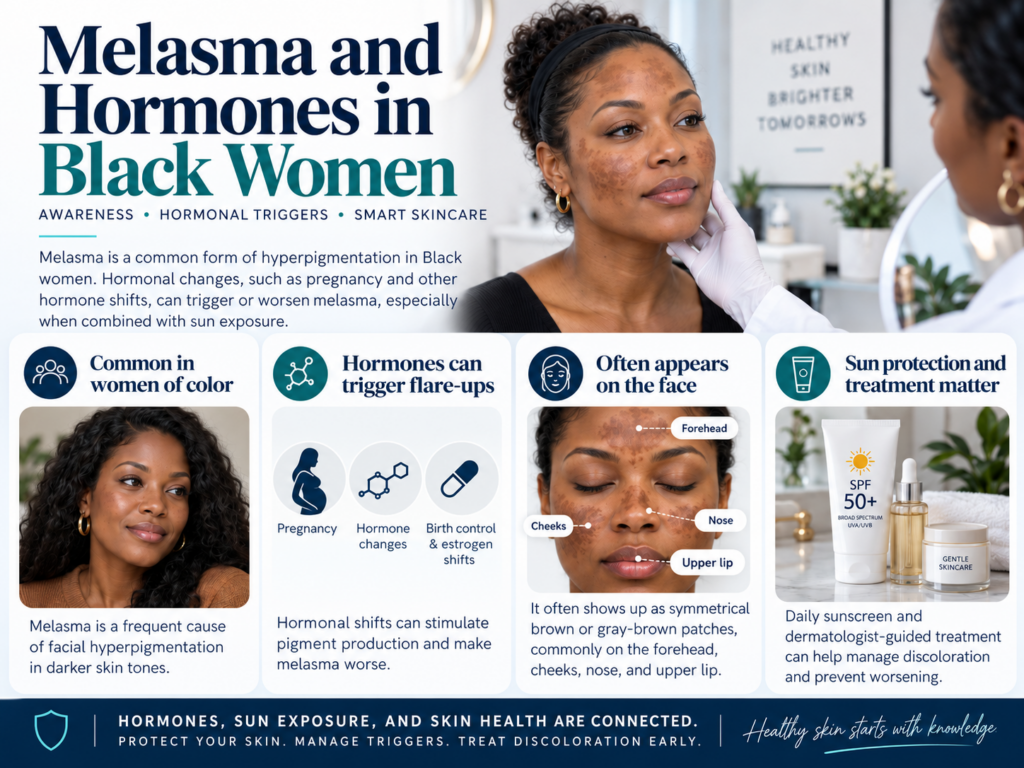
Melasma and hormones in Black women are closely connected. Melasma causes brown or gray-brown patches, most often on the cheeks, forehead, upper lip, and chin, and it is seen more often in women with darker skin. Hormones are one of its most important triggers, so understanding that link can help explain why melasma appears, returns, or gets darker.
How Melasma and Hormones in Black Women Are Connected
Melasma happens when pigment-producing cells in the skin make more melanin than usual in response to hormonal signals. Estrogen and progesterone both play a role, which is why most people who develop melasma are women. Pregnancy is the classic example, and it is why melasma is sometimes called the “mask of pregnancy.” Many women notice patches appear or darken during pregnancy, and they may fade after delivery, though not always completely.
Birth Control and Hormone Therapy
For many women, melasma and hormones in Black women first become linked when a new prescription is started. Hormonal birth control, including some oral contraceptives and hormone patches or rings, can trigger melasma or make existing patches darker. Hormone replacement therapy can have the same effect. If you notice patches after starting or changing a hormone medication, mention it to your prescriber. Do not stop a medication on your own without talking to your doctor first.
Other Triggers That Work Alongside Hormones
Hormones set the stage for melasma, but other factors can make it worse:
- Sun exposure, which is the most common aggravating factor
- Visible light, including sunlight and light from screens, which can darken existing patches for some people
- Heat, which can intensify patches in warm weather
- Friction or irritation from harsh skin care, which can add post-inflammatory darkening
Tracking these factors alongside hormone changes can show which triggers matter most for you. Daily sunscreen is one of the most important habits for managing hormone-related melasma. Sunscreens that contain iron oxides can help block visible light, which broad-spectrum sunscreens may not fully cover.
Why Melasma in Black Women Needs Careful Management
Because melasma and hormones in Black women often interact, treatment has to account for both the pigment and the hormonal trigger. Melasma can be harder to manage in darker skin because aggressive treatments can cause irritation, and irritation can lead to new dark marks. Treatment works best when it is gentle and tailored to your skin. For treatment options, see our melasma treatment guide for Black skin.
Signs That Hormones May Be Triggering Your Melasma
Melasma and hormones in Black women are linked in many cases, so these patterns can help you connect the dots:
- Patches that appeared or darkened during pregnancy
- Patches that started or worsened after beginning or changing birth control
- Patches that began during hormone therapy
- Symmetrical patches on the cheeks, forehead, or upper lip
- Patches that get darker in summer or with sun exposure
- Patches that do not improve with sunscreen alone
When to See a Dermatologist
If you are unsure whether melasma and hormones in Black women are linked in your case, a dermatologist can review your timeline and medications with you. See a dermatologist if patches spread, do not improve, change color, or come with itching, pain, or bleeding. A dermatologist can usually diagnose melasma through an exam, sometimes with a Wood’s lamp, and rule out other causes of darkening. A biopsy is rarely needed. For Decatur patients, call (404) 495-3898 to schedule an evaluation.
The American Academy of Dermatology provides general information on melasma and its causes.
Frequently Asked Questions About Melasma and Hormones in Black Women
Can birth control cause melasma?
Yes. Some hormonal birth control can trigger melasma or make existing patches darker. Talk to your prescriber before changing or stopping any medication.
Does melasma go away after pregnancy?
For melasma and hormones in Black women, the pattern is often the same: it fades after delivery, but it may not go away completely. It can return with later pregnancies or with hormone changes.
Can melasma start outside of pregnancy?
Yes. Melasma can begin without pregnancy, including with hormonal medications or other hormone changes.
This article is general education and does not replace an in-person skin exam. If you have patches that concern you, schedule an evaluation with a dermatologist.