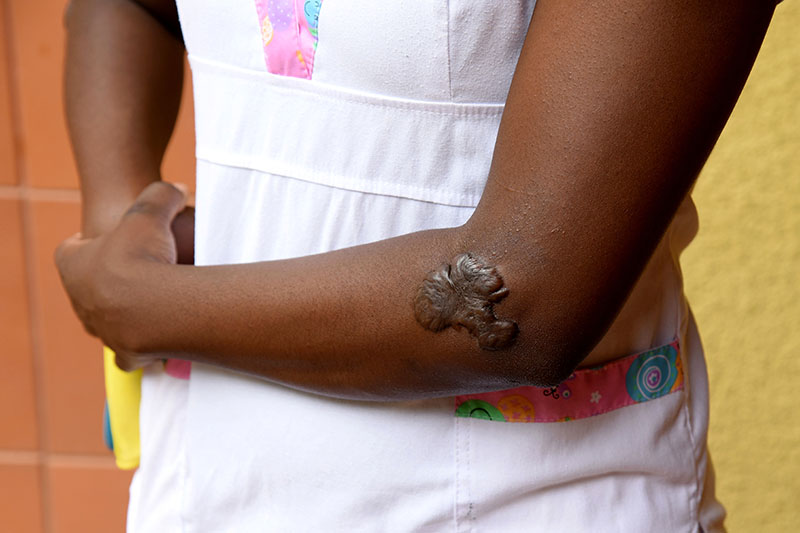
Why Black Skin Scars Differently: Understanding Keloids and Hyperpigmentation
Keloids on Black skin are far more common than most people realize — and far more misunderstood. If a small cut, bug bite, or pimple has ever left behind a raised, thick scar that kept growing long after the wound healed, you’ve likely experienced a keloid firsthand.
At World’s Famous Dermatologist, with offices in Decatur and Stockbridge, we treat keloids and related scarring concerns regularly, because skin of color heals differently — and deserves care from a team that understands that difference.
Why Black Skin Is More Prone to Keloids
Skin of color contains more active melanocytes, the cells responsible for pigment, and those cells tend to be more reactive to injury and inflammation. When the skin is damaged — from acne, a cut, surgery, or even a piercing — the healing response often produces either too much collagen at the site (a keloid) or too much pigment in the surrounding skin (hyperpigmentation). This isn’t a flaw in the skin; it’s simply how melanin-rich skin responds to trauma, which is exactly why keloids on Black skin need a different treatment approach than scarring in lighter skin.
Keloids on Black Skin: When Scars Don’t Stop Growing
A keloid forms when the body keeps producing collagen well after a wound has closed, causing the scar to extend beyond the original injury. Keloids tend to be raised, firm, and sometimes itchy or tender to the touch. They typically grow larger than the wound that caused them, and they show up most often on the ears, chest, shoulders, and jawline — frequently following piercings, acne breakouts, or minor cuts. Black patients are significantly more likely to develop keloids than any other group, and genetics plays a real role — if a parent or sibling has had keloid scarring, your own risk is higher.
Treatment for keloids at our practice may include corticosteroid injections to flatten and soften existing scar tissue, laser therapy, and in select cases surgical removal paired with follow-up treatment to reduce recurrence, since keloids are notorious for returning if removal isn’t managed carefully. According to the American Academy of Dermatology, people with darker skin tones and those with a family or personal history of keloids are at higher risk, and early, proper wound care is one of the most effective ways to reduce that risk.
Hyperpigmentation: A Related Concern for Patients With Keloids
Post-inflammatory hyperpigmentation (PIH) is what happens when a pimple, scrape, or irritation heals but leaves behind a flat, darker patch of skin. It’s a close cousin to keloid scarring — both are examples of how melanin-rich skin can overreact to injury — and patients who develop keloids on Black skin often deal with hyperpigmentation from the same triggers, like acne or minor cuts. Unlike a keloid, PIH isn’t raised, but it can be just as frustrating: it often takes months, sometimes over a year, to fade without treatment, sun exposure can make it darker and slower to resolve, and picking at the original spot tends to make things worse.
The good news: PIH responds well to treatment. Depending on severity, we may recommend topical treatments to fade discoloration, chemical peels formulated safely for darker skin tones, and daily sun protection — one of the biggest factors in how long dark marks stick around.
Why It Matters to See a Dermatologist Who Understands Skin of Color
General skincare advice online is often written with lighter skin in mind, and treatments that work well for one skin tone can make things worse for another. Over-aggressive peels or lasers, for example, can actually trigger more hyperpigmentation — or worsen a keloid — if they’re not dosed correctly for melanin-rich skin.
That’s the difference a specialist makes. Whether you visit us in Decatur or Stockbridge, our team has deep experience treating keloids on Black skin, hyperpigmentation, and the full range of concerns that present differently — and need to be treated differently — in Black and brown skin.
Related Pages
If you’re located near our Decatur office and want to learn more about treatment for keloids on Black skin and other conditions, visit our Black Dermatologist Decatur page. Patients closer to Henry County can find details on our Black Dermatologist Stockbridge page, including services specific to that office.
Ready to Talk to a Specialist About Keloids on Black Skin?
If you’re dealing with a keloid that keeps growing or dark marks that won’t fade, don’t wait it out — early treatment leads to better outcomes. Schedule a consultation at our Decatur or Stockbridge office today.