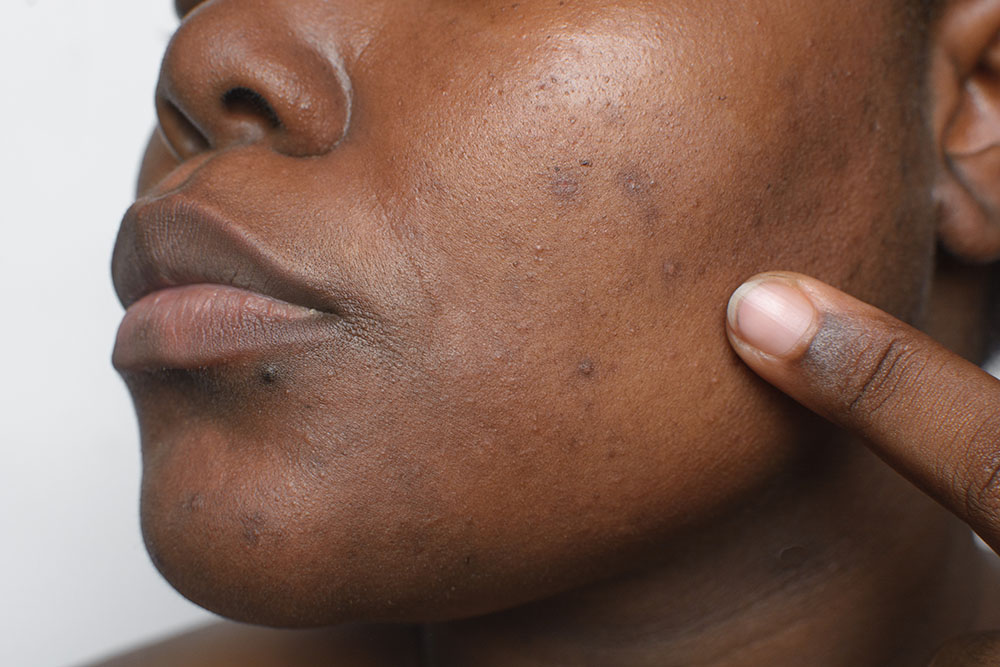
The Truth About Dark Spots After Acne in Melanin-Rich Skin
Dark spots after acne are one of the most common — and most frustrating — skin concerns we see in patients with melanin-rich skin. You finally get a breakout under control, only to be left with a flat, dark mark that lingers for months. The good news: it’s treatable, and understanding why it happens is the first step to getting rid of it faster.
What Causes Post-Acne Dark Marks?
The clinical name for this is post-inflammatory hyperpigmentation (PIH). When a pimple heals, the skin’s inflammatory response triggers melanocytes — the cells that produce pigment — to release extra melanin into the area. In melanin-rich skin, this response is naturally stronger, which is why these marks show up more often, more visibly, and take longer to fade in Black and brown skin than in lighter skin tones.
This is different from acne scarring, which involves actual changes in skin texture (pitting or raised tissue). PIH is flat — a pigment issue, not a texture issue — and that distinction is exactly why treating dark spots after acne calls for a different approach than treating scarring.
Why Dark Marks Take So Long to Fade
Left alone, PIH can take anywhere from several months to over a year to fade completely. A few things make these dark marks worse or slow their fading down further: picking or popping the original blemish, unprotected sun exposure (UV rays darken existing pigment and can deepen the discoloration), and continuing to break out in the same area before the old spot has healed. Patients often underestimate how much sun exposure alone can prolong post-acne discoloration.
Treating Dark Spots After Acne the Right Way
Not every treatment that works for acne itself works well for the marks left behind — and some products marketed for “brightening” are too harsh for melanin-rich skin and can actually trigger more hyperpigmentation. At our practice, treatment for these dark marks may include topical brightening treatments formulated safely for darker skin tones, chemical peels designed to fade pigment without irritating or further darkening the skin, and daily broad-spectrum SPF, which is non-negotiable for anyone treating PIH, since unprotected sun exposure can undo months of progress toward fading dark spots.
Preventing New Discoloration While Treating Old Spots
Because breakouts and post-acne discoloration often overlap, treating active acne alongside existing PIH is usually the most effective approach — clearing new blemishes early prevents new dark marks from forming while older ones fade. This is why an individualized plan, rather than a one-size-fits-all product routine, tends to get better results for patients dealing with both acne and dark spots at once.
Getting Treatment for Dark Marks in Decatur or Stockbridge
If dark spots are sticking around longer than they should, or nothing you’ve tried is working, it’s worth having a dermatologist evaluate your skin rather than continuing to guess. Both our Decatur and Stockbridge offices treat PIH regularly and can build a plan suited to your skin type and the severity of the discoloration.
Related Pages
If dark marks and post-acne discoloration are an ongoing concern, learn more about the full range of skin of color services available near you: Black Dermatologist Decatur or Black Dermatologist Stockbridge.
Ready to Treat Your Dark Spots After Acne?
Schedule a consultation at our Decatur or Stockbridge office and start a treatment plan built for melanin-rich skin.